
Four students earn Rackham scholarships for 2026-27
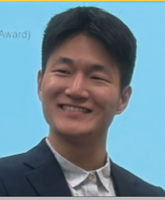
Clockwise from top left: Arkajit Ghosh, Avinava Roy, Chuqi Huang, and Wonjoon Suk.
MSE is proud to announce that Ph.D. students Arkajit Ghosh, Avinava Roy and Wonjoon Suk all received Rackham Predoctoral Fellowships for 2026-27. Rackham also named Chuqi Huang a Barbour Scholar.
The prestigious Rackham Predoctoral Fellowship supports outstanding doctoral students working on dissertations that are unusually creative, ambitious, and impactful. The award includes a stipend and covers tuition and required fees for twelve months.
A part of the Rackham Predoctoral Fellowship selection process, Barbour Scholarships recognize U-M women of the highest academic and professional caliber from Asian countries (from Turkey in the west to Japan and the Philippines in the east) to study academic disciplines critical to the development of their native lands.
Below are each recipient's thesis title and research description.
Arkajit Ghosh
Misra Group
"Mechanisms of Plastic Co-deformation in Nano-scale Eutectic Heterostructures"
 Nano-scale eutectic heterostructures are a promising class of structural materials, but their performance is often limited by the brittle failure of hard phases. This research examines how soft and hard phases can plastically deform together, helping overcome the traditional tradeoff between strength and ductility. By combining rapid solidification methods such as additive manufacturing with chemical modification, my work shows how nanoscale refinement can activate unusual plastic deformation mechanisms in normally brittle phases. Advanced electron microscopy and nanomechanical testing across a range of temperatures reveal the atomic-scale processes that suppress strain localization and delay cracking. The mechanistic findings will help establish a framework for developing more robust, damage-tolerant materials.
Avinava Roy
Loebel Group
"Engineering dynamic cell culture platforms to recapitulate tissue folding mechanics"

Biological tissues are inherently dynamic, continuously folding and remodeling, yet in vitro models fail to capture such changes. To bridge this gap, my dissertation focuses on engineering dynamic platforms that mimic tissue shape changes on-demand and capture cell-state changes in real time. Primarily, I have developed two systems: a magnetoactive hydrogel actuated by magnetic fields and a Kirigami-inspired device driven by mechanical actuation. I validated these platforms by modeling airway constriction and arterial tortuosity, showing that dynamic folding is a critical regulator of epithelial barrier function and endothelial health. In my final year, I am utilizing the Kirigami-inspired micromechanical platform to ask a fundamental yet unexplored question: how the extracellular matrix underlying cell monolayers adapts to dynamic curvature. This dissertation provides versatile toolkits for mechanobiology, enabling researchers to move beyond static culture systems and observe cells in dynamic environments.
Wonjoon Suk
Li Group
"Quantifying Current Heterogeneity among Layered Oxide Battery Cathodes Using Microelectrode Arrays"
 Li-ion battery electrodes consist of billions of micron-sized ceramic particles. Most battery measurements report only an average electrochemical signal from the whole electrode, which can mask how individual particles charge and discharge. My dissertation addresses this by isolating individual particles on a microelectrode array, forming a mini battery of eight particles and tracking each one in real time with sub-second and picoampere resolution. I discovered that during the initial charge, some particles charge significantly faster than others. This first-charge heterogeneity arises from intergranular cracking in polycrystalline NMC layered-oxide particles, driven by anisotropic volume changes of individual grains.These cracks serve as express pathways, enabling particles that crack earlier to charge preferentially. This sequential charging continues until all particles have cracked, after which subsequent cycles become uniform. These findings demonstrate that microcracking, traditionally considered detrimental, plays a beneficial role in achieving fast and uniform charging. This new perspective informs design strategies for advanced, reliable energy storage for an electrified future.
Chuqi Huang
Pena-Francesch Group
"Multifunctional Adaptive Materials for Robotic Embodied Intelligence"

Huang's research is focused on biopolymers and functional soft materials to pioneer alternative power and control approaches for micro-scale robots. For example, inspired by the walking and propulsion mechanisms discovered in semi-aquatic insects, she developed a protein-based chemical fuel to mimic the amazing power capabilities of these insects. Then, by incorporating photoresponsive materials, milli swimmers, mimicking insects’ body gesture changes via surface deformation, we can realize diverse locomotion control and active direction transition. This new strategy offers orthogonal power and control solutions for autonomous swimming soft robots.
Congratulations to Arkajit, Avinava, Wonjoon and Chuqi!